CASE STUDY
Reef Check Dominican Republic
Implementing Organization: Reef Check, Dominican Republic
GRANT NUMBER: SIDA QCL-2324-3474-2661-2271.
Submitted by: The Gulf and Caribbean Fisheries Institute, Inc.
GCFI Tracking Number: SGF2007_SSF_01
SGF2007_SSF_02 Page 2 of 8
Executive Summary
Reef Check Dominican Republic
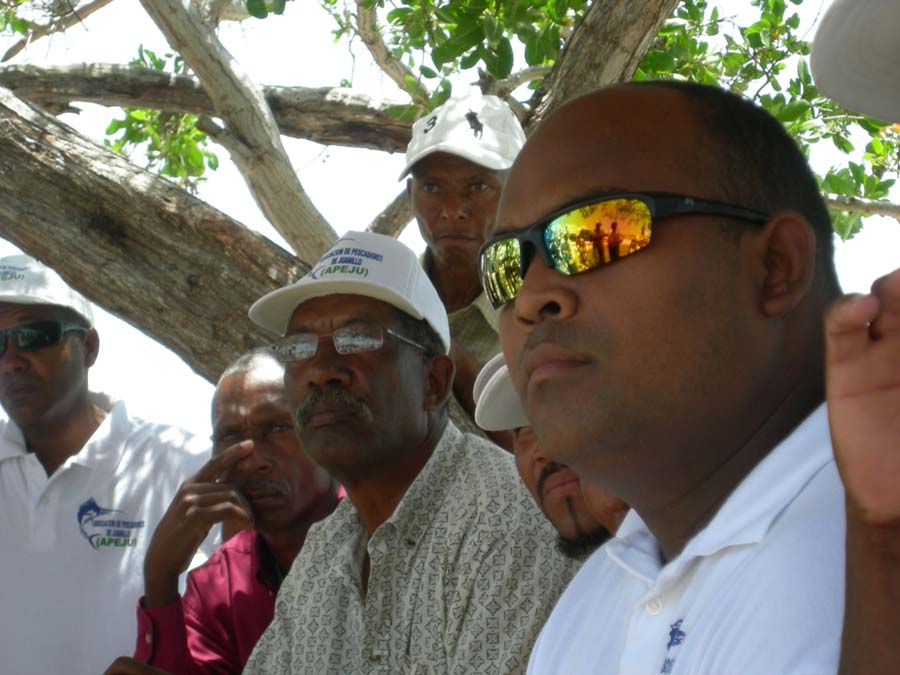
The Asociacion de Pescadores de Juanillo (APEJU) was formed to protect the rights of fishers
and ensure sustainable fishing. This case involvded exchange of fishers between APEJU and
Mexican Fisher Cooperatives in Punta Allen, Puerto Morales, and Cozumel. The following
objectives were predefined:
Objective 1: APEJU members gain sufficient knowledge and experience to work with
stakeholders in the development and execution of a management plan for a marine
protected area (MPA).
Objective 2: APEJU members are exposed to innovative fishing techniques and, where
applicable, incorporate these ideas to develop more efficient and sustainable local fishing
practices.
Objective 3: REEF CHECK director, Peace Corps Volunteer and APEJU members
develop a stronger working relationship, resulting in a collaborative effort to conserve the
Punta Cana reef through adoption of REEF CHECK reef monitoring practices.
Objective 4: Through increased knowledge of project execution and gained
confidence, three additional fishermen take on new leadership roles within
APEJU, such as joining the board of directors or leading special projects, as well
as taking a leading role in needed internal reorganization.
The following outputs were achieved:
1. A 6 day, 7-night fishers exchange took place June 26 July 2 in the Yucatan
Peninsula of Mexico.
2. Three local fishers, the director of Reef Check DR and a Peace Corps
Volunteer participated.
3. An effective communication channel between Dominican Republic and
Mexican fisherman
4. Lobster fishing workshop was conducted on fishing and casitas on 1 July
5. Fly fishing and tourist workshop was conducted on 30 June with National
Reserve Park staff and fisher cooperatives
6. Sustainable fishing practices were examined. Mexico fishermen were able to
learn lessons from DR fishermen on what could happen if sustainable fishing
practices are not followed.
7. Some sustainable fishing practices that were discussed have already been
implemented including construction of casitas and fish aggregation devices
(FADs)
Analysis of the Environment
Activities were examined solely within the marine environment and specifically within
Marine Protected Areas. The environment included examination of activities within the
SGF2007_SSF_02 Page 3 of 8
commercial fishing sector as well as inputs from park staff and REEFCHECK, a local
Dominican NGO. Fishing practices in the Dominican Republic have led to collapse of
many fisheries due to unsustainable fishing practices. The exchange with Mexico was
designed to examine alternative fishing activities and livelihoods with the goal to increase
conservation and sustainablilty of fishing practices both in the Domincan Republic and
Mexico.
The Experience
The vision of this experience was to develop sustainable fishing practices as well as
alternatives to fishing in order to sustain livelihoods in fishing communities in the
Dominican Republic. These communicates had already determined that alternative
livelihoods were an appropriate and desirable approach to solve the overfishing and lack
of management for conservation of their marine resources. Toward that end, REEF
CHECK and the Peace Corps have been working with APEJU leaders to begin a reef
monitoring program, address organizational challenges, and establish permanent
protection of an area where APEJU currently limits fishing. This exchange was an
opportunity to validate and increase the leadership capacity of local fishermen, expose
them to well-managed marine protected areas, and introduce them to alternative gear
choices, sustainable fishing strategies, and alternative livelihoods including working with
the tourist sector of the local economy.
Development
In the Dominican Republic, intensive fishing pressure by coastal communities has
resulted in overfishing of many fish stocks and reduction of traditional employment
opportunities. Punta Cana is now in the midst of a commercial building expansion
thus resulting in demand for local fisheries resources. As a result, the local fisher
organization (APEJU) has been meeting among their members and local fishers to
develop strategies to help manage their local fisheries. Because of the lack of
knowledge of sustainable fishing practices, REEFCHECK has been organizing,
together with APEJU, community-based management meeting to develop and execute
a management plan. The exchange that was conducted with Mexico provided details
on both sustainable fishing practices as well as alternative livelihoods in the amrin
esector including MPA management and tourist-based activities. In the realm of
sustainable fishing practices, lobster fishing workshop were conducted on on
sustainable practices including development of a casita fishery. Additionally,
a fly fishing workshop oriented towards training local fihers to become fishing guides
for the high end tourists who visit the resorts of Punta Cana. These workshops were
conducted between June 26 2008 and July 2 2008 between National Reserve Park
staff, Mexican fisher cooperatives, and the Dominican Republic fishers. Sustainable
fishing practices were examined. Some sustainable fishing practices that were
discussed have already been implemented including construction of casitas and fish
aggregation devices (FADs). In addition, a video of the activity was produced and
will be used to disseminate the information among fishers in the region.
SGF2007_SSF_02 Page 4 of 8
Important Aspects for Decision Making
This hands on experience has opened the eyes to alternatives for the local fishers
proide them the ability to that sustainablility and conservation can be achieved by susing
alternative fishing practices as well as gaining employment in other sectors that are
marine related. The direct contact of fishers from other cultures that benfit from employi
ng these alternative approaches clearly demonstrate d tot the local fishers that
Pending Questions or Tasks
1. Are the methods utilized in Mexico directly applicable to the Dominican Republic
2. Is the Government structure in the Dominican Republic in favor of adapting these
alternatives
3. How positive is the response from the local, regional, and nationlal government
entities to these changes
4. Does the private sector support and encourage these activities
5. Does the local community and other stakeholders support these activitesw
6. Can reasonable incomes b achieved using these practices
7. Is one exchange sufficient to develop the capacity required to
8. How can other stakeholder (including governemtn official, hotel operators, tourist
operations, etc.) be incorporated into this process.
SGF2007_SSF_02 Page 5 of 8
Annexes
Annex 1.
Background of the case
The Asociacion de Pescadores de Juanillo (APEJU) was formed to protect the rights of
fishers and ensure sustainable fishing. Juanillo, at one point an active beachside fishing
village, was "moved" to its present location a few kilometers inland to make way for a large
private resort. At present, fishers live in both "Nuevo Juanillo" and other communities much
further inland. They have only one access point to the beach, consisting of approximately 50
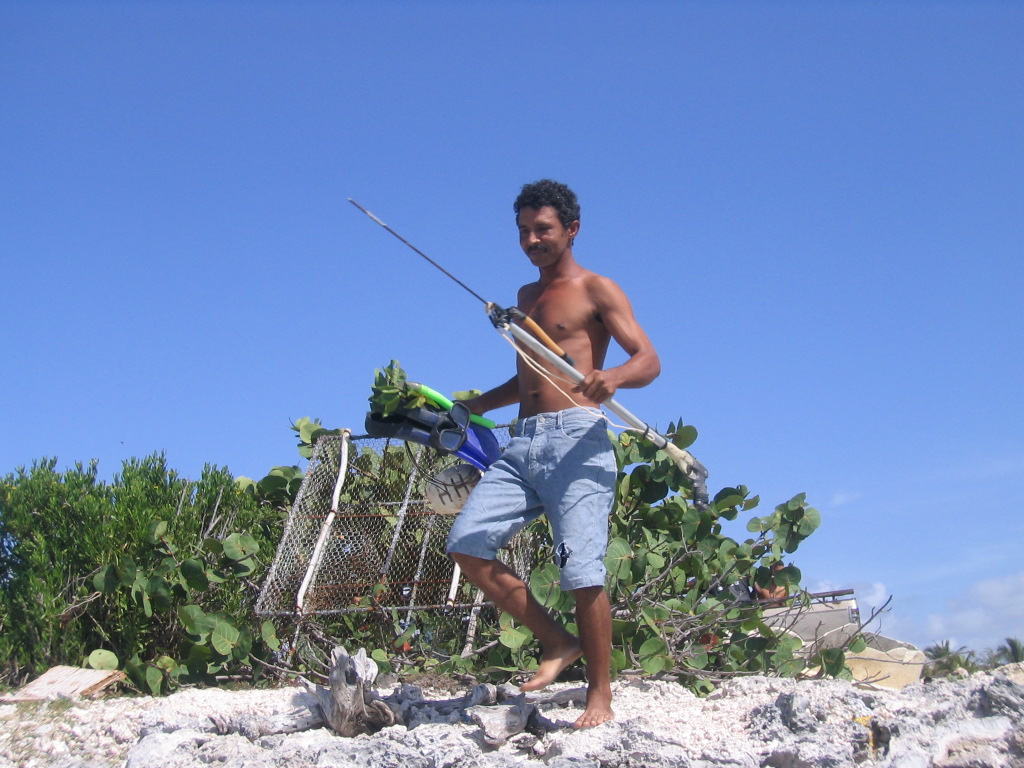
meters of shoreline. Roughly half of the fishermen swim from this point to the reef each day
to spearfish, which many believe is threatening the fishery due to over fishing such a small
sector. Other pressures on the fishery include prolific use of lobster traps and
hookah/compressor diving.
APEJU faces organizational challenges as well. In seeking experienced counsel during the
initial formation of a union, or "sindicato," they allowed many who are not fishermen to
hold membership in the association. These members have begun to dictate the activities of
APEJU and are dominating the board of directors. The APEJU president, with the support of
some of the fishermen, is attempting to address this issue and strengthen membership
requirements, but the process has been difficult.
REEF CHECK Dominican Republic, in collaboration with a local Peace Corps volunteer, has
partnered with area fishermen to help them preserve and protect their own reef. REEF CHECK's
Coral Reef Monitoring Program offers a basic method of assessing reef health that the fishermen
can carry out. Other strategies REEF CHECK employs include encouraging alternative income
sources, and working with area stakeholders to develop a sustainable management plan.
SGF2007_SSF_02 Page 6 of 8
Annex 2. Photographs of the Workshops
Current fishing practices in the Dominican Republic include spearfishing and the use of
non-selective gear including fish traps.

SGF2007_SSF_02 Page 7 of 8
The fishing fleet of Punta Cana consists of traditional fishig boats and a tourist oriented
vessel.
SGF2007_SSF_02 Page 8 of 8
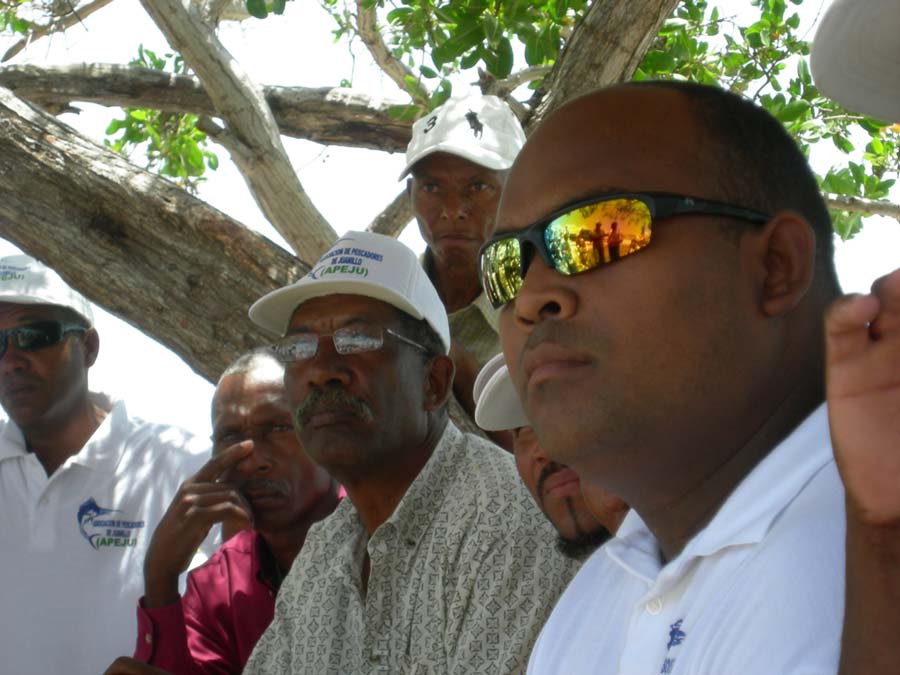
Workshop with participants from APEJU and Mexico.